
Our Frequently Asked Questions
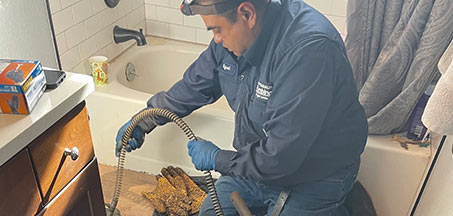
Frequent clogs can indicate a more significant issue than surface-level debris. Common causes include grease buildup, flushing non-flushable items, tree roots, and pipe damage. If you experience frequent recurring clogs, call a plumber for a drain camera inspection to see what’s happening in your plumbing system.
Low water pressure at a single fixture could be due to a clogged aerator or worn-out faucet. However, if you experience low water pressure throughout the house, it could be caused by mineral buildup in pipes, unseen water leaks, or an issue with the municipal water supply. If cleaning the fixtures doesn’t help, call a professional to investigate.
A sump pump is installed in basements or crawl spaces to prevent flooding. It collects and pumps out water accumulating in a sump pit, usually caused by rain or groundwater. You might need a sump pump if:
- You live in a flood-prone area
- Your home has a high water table
- You have water-sensitive belongings in the basement
Sump pumps come in two types: submersible (installed inside the pit) and pedestal pumps (the motor sits above the pit). Both need regular maintenance to ensure they’re in good condition and will work during an emergency.
Tankless water heaters are growing in popularity. It’s true that they’re more expensive than traditional tank-style water heaters, but many homeowners think they’re worth it, and here’s why.
Tankless systems are more energy-efficient than standard water heaters, which can save money on utility bills. They also provide unlimited hot water, which lasts longer, making them a better long-term investment.
For small households with low hot water needs, a tankless water heater may take longer to offset the initial investment. However, for larger families or people with high hot water demands, the efficiency and convenience make them worthwhile.
Consider your home’s hot water needs, budget, and energy priorities to help you decide. Let Manny’s Quality Plumbing Heating & Air give you the expert assistance you need in Greeley, CO.
Most homeowners use over-the-counter drain cleaners to remove clogs. While these products are fine for clearing minor clogs, they come with significant risks and drawbacks that make them a less-than-ideal solution, and here’s why.
- Pipe damage: The harsh chemicals in these products can corrode or weaken certain kinds of pipes, especially older ones, PVC, or galvanized steel. Over time, this can lead to leaks, bursts, and costly repairs.
- Health hazards: The chemicals are highly toxic and can emit fumes that irritate skin, eyes, and lungs. Accidental splashes can cause severe burns.
- Environmental impact: Chemical drain cleaners can contaminate water systems and harm aquatic life. They can also kill the living bacteria in your septic system, damaging drain fields and clogs.
- Ineffective on severe clogs: These cleaners work on small, organic clogs close to the drain. For grease, hair, or tree roots, you need professional solutions.
Unusual noises from the water heater, like popping, rumbling, or banging, are common concerns, but they rarely indicate imminent danger.
That doesn’t mean you should ignore them, either. These sounds are often caused by sediment buildup in the tank, water pressure issues, a loose heating element, or the tank’s expansion and contraction.
While the risk of an explosion is rare, it can happen if the temperature and pressure relief valve fails or is blocked. That’s why it’s recommended that a trusted plumber inspect and flush the tank at least once a year.
A constantly running toilet is annoying and wastes significant amounts of water. The problem typically stems from an issue in the tank. In most cases, it’s the flapper, the float, the fill valve, or the overflow tube.
These parts are easy to replace; however, if you’re not handy or don’t feel comfortable doing it yourself, call a plumber for help. Checking these components every few months can alert you to potential problems and extend your toilet’s lifespan.
Clean up any water or liquid mess from the leak with a mop and/or towels, then determine if the leak can be contained with a bucket or another container until a plumber can come out. You can use a wet vacuum to suck up the water and try to dry out the space as much as possible with fans to circulate the air.
Hiring a professional plumber will help you save lots of time. An experienced professional plumber will be able to locate the plumbing issue quickly and resolve it as soon as possible. This will save you a lot of time. Also, professional plumbers are cost-effective.
The National Fuel Gas Code states that your gas water heater should be 18 inches off the ground. This is the standard for water heater installation requirements.
If your plumbing vent is clogged, the vacuum inside the pipes can cause water to get trapped inside of them instead of draining out through your sewage line. Since the water has nowhere else to go, it will eventually back up inside your sinks and drains.
If your tank water heater is over ten years old, it may be time to consider replacing it. With proper maintenance, a tank water heater should last six to 12 years, while a tankless water heater can last more than 20 years.
There are a few reasons why your dishwasher won’t drain. The most common source of clogs comes from a blockage in the dishwasher’s filter. Or, you may have an issue with your dishwasher’s air gap, drain valve, drain hose, or even garbage disposal, causing your dishwasher to clog.
PEX pipe (plastic tubing) is cheaper than copper and more durable. PEX is immune to corrosion and mineral build-up, and it’s not affected by electrolysis, which can cause small pinhole leaks in copper piping. Copper pipes can last anywhere from six months to the life of a building.
- Keep water faucets running
- Direct warm air to cold areas of your home
- Leave your cabinet doors open
- Disconnect your hose from the outside faucet
- Install heat tape
- Seal leaks that allow cold air into your home
- Check your home’s temperature
Some common signs that your air conditioner needs professional repair include warm air coming from the vents, weak airflow, unusual noises or odors, frequent cycling (turning on and off), or higher-than-normal energy bills.
If your AC isn’t keeping your home comfortable, it’s best to schedule an inspection.
Heaters and furnaces typically last 10–15 years. If your heating system is aging, requiring frequent repairs, heating unevenly, producing new noises, or causing energy bills to rise, it may be more cost-effective to replace it. Upgrading to a new, energy-efficient unit can improve comfort and reduce long-term costs, especially in Northern Colorado’s cold winters.
Professional AC installation includes evaluating your home’s size and insulation, helping you choose an appropriately sized and efficient unit, removing the old unit if necessary, and properly installing and testing the new air conditioner. A quality installation ensures reliable cooling and lowers your energy bills.
Furnace repair starts with diagnosing issues, such as checking the ignition system, thermostat, blower motor, and filters. Technicians may replace worn parts, clean critical components, and ensure the system operates safely and efficiently. If you notice inconsistent heating, strange noises, or frequent cycling, call for a professional assessment.
Indoor air quality can be improved with routine HVAC maintenance, changing air filters regularly, and using solutions like air purifiers, humidifiers, or whole-house ventilation systems. These help remove dust, allergens, and pollutants. In Northern Colorado, where homes are closed up in winter, maintaining good indoor air quality is especially important.
It’s best to have your HVAC systems professionally serviced once a year—air conditioners in the spring and heaters or furnaces in the fall. Regular maintenance keeps equipment running smoothly, extends its life, and helps catch small problems before they become costly repairs.